Why Customer Experience Transformation Is No Longer Optional

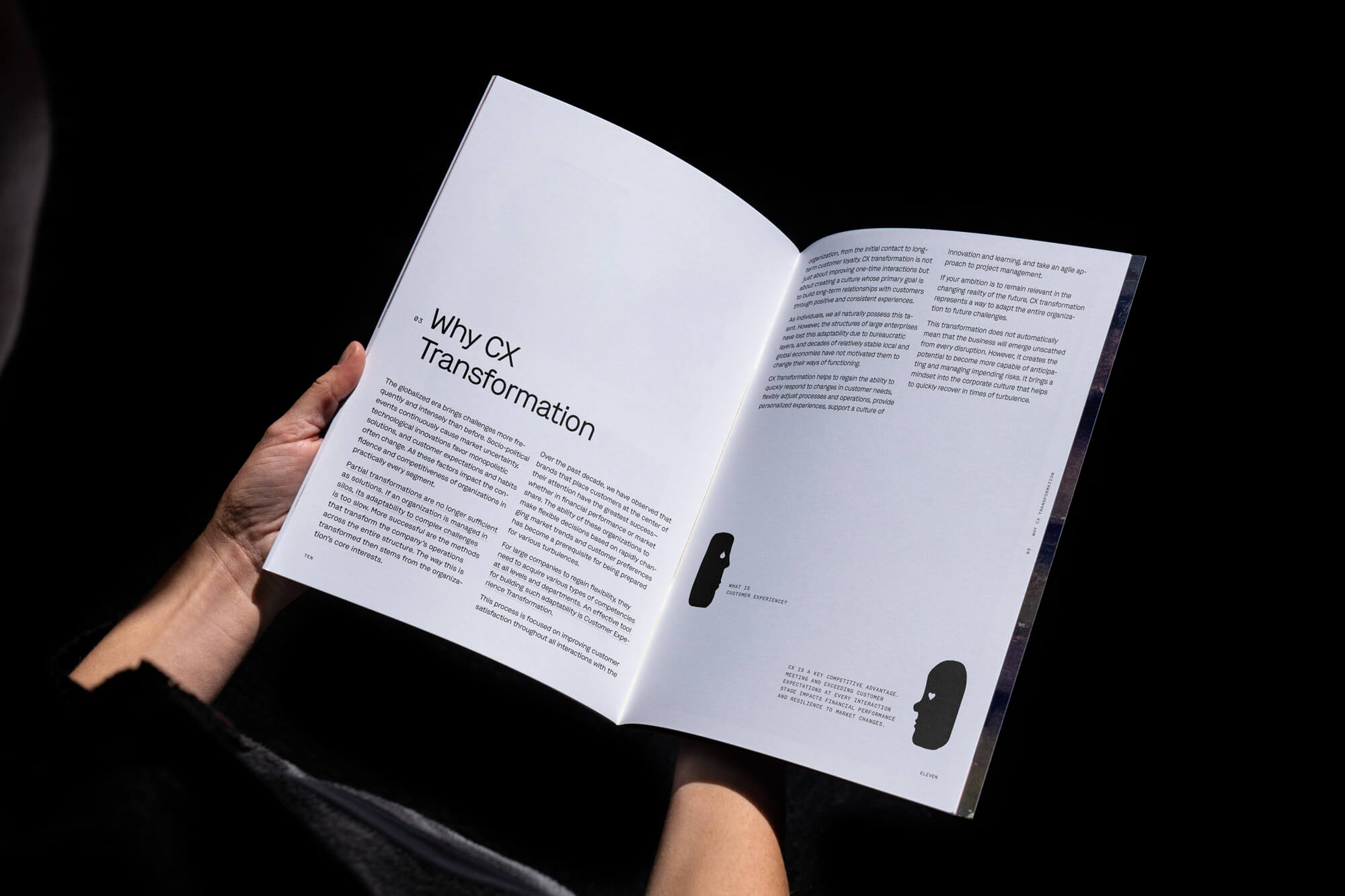
Why Customer Experience Transformation Is No Longer Optional
Almost every company today claims to be customer-centric. The phrase appears in mission statements, strategy decks, and employer branding campaigns alike. Yet when you look closer –at processes, decisions, incentives, and everyday behaviors – customer experience (CX) often remains fragmented, inconsistent, or entirely absent from how organizations truly operate.
This gap between intention and reality is exactly where Customer Experience Transformation begins.
Our new whitepaper, The Complete Guide to CX Transformation in Your Organization, was created to address a simple but uncomfortable truth: putting the customer first is not a mindset problem – it’s a structural one. And without deliberate transformation, even the most well-meaning organizations struggle to deliver experiences that meet, let alone exceed, customer expectations.
From "Nice-to-Have" to Business Critical
Customer experience used to be treated as a soft discipline – something owned by marketing, design, or customer support. Today, it is increasingly clear that CX directly impacts financial performance, resilience, employee satisfaction, and long-term competitiveness.
Markets are more volatile. Customer expectations evolve faster. Products and services are easier to copy than ever. In this environment, experience becomes the differentiator.
Yet many organizations still attempt to "fix" CX through isolated initiatives: a website redesign, a new CRM, a brand refresh, or a customer journey workshop. While these efforts may deliver local improvements, they rarely create lasting change. The reason is simple: CX cannot thrive in silos.
True CX transformation requires organizations to rethink how they make decisions, collaborate, measure success, and learn from customers – across the entire company.
What CX Transformation Really Means
CX transformation is not about optimizing touchpoints in isolation. It is about embedding customer-centric thinking into the organization's operating system.
That means:
- Making decisions based on customer needs and data – not assumptions or internal politics
- Designing processes that reduce customer effort rather than organizational friction
- Aligning strategy, culture, delivery, and competencies around a shared CX vision
- Moving from transactional interactions to long-term relationships
out because it spans allIn practice, this often requires unlearning deeply ingrained habits. Many organizations were built for efficiency, predictability, and internal optimization. CX transformation challenges those foundations by asking a different question at every level: What does this mean for the customer?
The whitepaper explores this shift in depth, showing how customer experience becomes a lens through which strategy, operations, and culture are continuously evaluated and improved.
Why Partial Transformations Fail
Over the past decade, companies have invested heavily in digital, financial, strategic, and organizational transformations. While each of these has value, the whitepaper makes one thing clear: isolated transformations lead to isolated results.
Digital tools without cultural change don’t create better experiences.
Process optimization without customer insight often optimizes the wrong things.
Strategy without delivery alignment remains theoretical.
CX transformation stands apart because it cuts across all of these dimensions. It doesn’t replace other forms of transformation – it integrates them. By placing the customer at the center, organizations gain a unifying principle that connects strategy with execution, leadership with teams, and innovation with real-world impact.
The Role of Maturity: Knowing Where You Stand
One of the most practical challenges organizations face is knowing where to start. Not every company is ready for the same level of change, and applying "best practices" without context often leads to frustration.
That’s why the whitepaper introduces a CX maturity model, describing how organizations evolve from ignoring customer experience altogether to fully integrating it into every decision and interaction. Each stage comes with distinct characteristics, risks, and recommended actions.
Understanding your current maturity level allows you to:
- Set realistic goals
- Prioritize the right interventions
- Avoid over-investing or moving too fast
- Measure progress meaningfully
CX transformation is not a one-off project. It is a long-term journey – and maturity provides the map.
Change That Actually Sticks: Bottom-Up, Top-Down, or Both?
Another recurring question is ownership: Who should drive CX transformation?
Bottom-up initiatives often emerge from motivated teams close to customers, but they struggle with scale and influence. Top-down initiatives can mobilize resources quickly, but risk resistance and superficial adoption.
The whitepaper argues for a combined approach – one that aligns leadership vision with employee-driven execution. Sustainable CX transformation happens when strategy and everyday practice reinforce each other, and when people across the organization see themselves as responsible for the customer experience.
This balance is difficult to achieve, but it is also where the most significant leverage lies.
Four Streams That Make CX Transformation Work
Rather than treating CX as a single workstream, the whitepaper breaks transformation down into four interconnected streams:
- Governance – creating a shared CX vision, strategy, and decision framework
- Delivery – embedding customer-centric methods into products and services
- Culture – shaping attitudes, behaviors, and shared understanding
- Competence – building skills, teams, tools, and operational support
Each stream reinforces the others. Neglecting one weakens the whole system. Addressing them together is what turns good intentions into lasting organizational capability.
Starting Small – But Thinking Long-Term
Perhaps the most important message of the whitepaper is this: CX transformation doesn’t start with perfection. It starts with commitment.
Pilot projects, focused improvements, and measurable quick wins are not shortcuts – they are learning tools. They help organizations build confidence, develop skills, and demonstrate value without overwhelming people or structures.
At the same time, CX transformation must be approached with a long-term perspective. It requires investment, patience, and continuous learning. There is no final state—only increasing maturity and resilience.
A Practical Guide for Real Organizations
This whitepaper was written for organizations that want more than inspiration. It is a practical guide for leaders, strategists, designers, product managers, and change-makers who recognize that customer experience is not just about delight – it’s about survival and relevance.
If you are asking yourself:
- Why CX initiatives keep stalling
- Why customer insight doesn’t influence strategy
- Why teams struggle to align around the customer
- Or how to start transforming without breaking what already works
Then this guide was written for you.